Lose Weight Without the Gym — Here’s How

Many people want to lose weight, but going to the gym can seem scary. Luckily, you can lose weight at home with the right home workouts and healthy nutrition plans.

There are many ways to lose weight without a gym. Simple exercises and smart food choices can help you reach your goals. This approach is easy and effective.

Key Takeaways

  • Effective weight loss can be achieved without a gym membership.
  • Home workouts offer a convenient and efficient way to exercise.
  • A healthy nutrition plan is crucial for successful weight loss.
  • Simple dietary changes can significantly impact weight loss progress.
  • Combining home workouts with healthy eating can enhance weight loss results.

Understanding Weight Loss Fundamentals

Starting a weight loss journey means learning the basics. Sustainable weight loss isn’t about quick fixes. It’s about making lasting changes for better health.

The Science of Calorie Deficit

A key part of losing weight is creating a calorie deficit. This means eating fewer calories than you burn. You can do this by eating less and moving more.

When you’re in a calorie deficit, your body uses fat for energy. This leads to weight loss.

Setting Realistic Weight Loss Goals

Setting achievable goals is crucial for success. Aim to lose 1-2 pounds a week for lasting results. Losing weight slowly is better for keeping it off.

Unrealistic goals can lead to disappointment. So, set goals that are within reach.

Tracking Your Progress Effectively

Keeping track of your progress is key. Use a food diary or a mobile app to monitor your habits. This helps you see what works and what doesn’t.

Tracking your progress keeps you on track. It helps you adjust your exercise routine and diet as needed.

By following these basics, you can achieve sustainable weight loss. And you’ll improve your health in the process.

Lose Weight Without the Gym Through Proper Nutrition

Proper nutrition is key for losing weight, even without a gym. By making smart food choices, you can lose a lot of weight. This method not only helps you lose pounds but also makes you healthier.

Creating a Sustainable Meal Plan

Creating a good meal plan is essential for losing weight. It means choosing foods that are full of nutrients and planning meals that fit your calorie needs. A good plan keeps you on track and helps you avoid bad food choices.

Nutrient-dense foods like fruits, veggies, lean proteins, and whole grains should be your main foods. They give you important vitamins, minerals, and fiber while keeping calories low.

Portion Control Strategies

Controlling how much you eat is important for managing calories. Using smaller plates, measuring food, and knowing serving sizes can help a lot. It’s about learning to eat the right amount.

Hydration’s Role in Weight Loss

Drinking enough water is often forgotten but it’s very important. It helps you feel full and can speed up your metabolism. Drinking water, especially before meals, can help with weight control.

Mindful Eating Practices

Mindful eating means paying attention to your food. It’s about enjoying the taste, texture, and smell of your food. Eating slowly can help you eat less and enjoy your meals more.

Common Nutrition Mistakes to Avoid

One big mistake is following fad diets or quick fixes that don’t last. Another is not eating enough protein or fiber, which can make you hungry. Knowing these mistakes can help you make better food choices.

By using these nutrition tips, you can lose weight without going to the gym. This sets you on a path to a healthier, more lasting lifestyle.

Effective Home Workouts for Weight Loss

Home workouts are a great way to lose weight without spending a lot on gym equipment. With a good plan, you can see real results from home.

Bodyweight Exercises Anyone Can Do

Bodyweight exercises are key for home workouts. They use your own weight to build strength and endurance. Squats, lunges, and push-ups are good examples.

Push, Pull, and Core Movements

Bodyweight exercises fall into three main categories: push, pull, and core. Push-ups work your chest and triceps. Bodyweight rows target your back and biceps. Planks strengthen your abs.

Building a Progressive Routine

To keep improving, you need a progressive routine. Increase the number of reps, sets, or the difficulty of exercises. For example, try diamond push-ups or decline push-ups after regular push-ups.

Creating an Exercise Schedule That Sticks

Being consistent is crucial for weight loss at home. Make a schedule and stick to it. Start with short sessions and gradually increase the time and frequency.

Equipment-Free Cardio Options

Cardio is important for burning calories and losing weight. Many cardio exercises don’t need any equipment. Jumping jacks, running in place, and burpees are great options. They can boost your calorie burn in a home workout.

Minimal Equipment Worth Investing In

While bodyweight exercises are great, some minimal equipment can add variety. Resistance bands and adjustable dumbbells are affordable and take up little space. They can help with strength training.

Lifestyle Changes That Accelerate Weight Loss

Making lifestyle changes is key to losing weight faster. Diet and exercise are important, but other factors matter too. By changing your lifestyle, you can lose weight in a way that lasts.

Optimizing Sleep Quality and Duration

Good sleep helps control your weight. Bad sleep can make you eat more. To sleep better, go to bed at the same time every night. Make your bedroom calm and avoid screens before bed. Try to sleep 7-9 hours each night.

Effective Stress Management Techniques

Stress can stop you from losing weight by making your body store fat. To manage stress, try meditation, deep breathing, or yoga. Doing things you enjoy or spending time outside can also help.

Incorporating Movement Into Daily Activities

Moving more can help you lose weight. Try taking the stairs, walking to work, or doing chores. These activities burn calories and make you healthier.

Building Sustainable Healthy Habits

Creating lasting healthy habits is important for losing weight. Begin with small changes, like drinking more water or eating less sugar. Then, add bigger changes, like exercising regularly or eating healthier. Being consistent is key to keeping these habits.

Lifestyle Change Benefit Implementation Tip
Optimizing Sleep Regulates hunger hormones Maintain a consistent sleep schedule
Stress Management Reduces cortisol production Practice meditation or deep breathing
Incorporating Movement Increases calorie burn Take the stairs or walk to work
Healthy Habits Promotes long-term weight loss Start with small, achievable changes

Conclusion

Losing weight without a gym is doable and works well with healthy eating, home workouts, and lifestyle tweaks. Knowing how to lose weight, planning meals, and staying active are key. These steps help reach weight loss goals.

Good nutrition is vital for losing weight. Eating whole foods, controlling portions, and drinking plenty of water are key. Home workouts, like bodyweight exercises and cardio, can be as good as gym workouts if done regularly.

Making lasting lifestyle changes helps speed up weight loss. Improve sleep, manage stress, and build healthy habits. Begin with small steps today and see your progress grow.

FAQ

What is a calorie deficit and how does it aid in weight loss?

A calorie deficit means you eat fewer calories than your body uses. This leads to weight loss. You can achieve this by eating less and moving more.

How can I create a sustainable meal plan for weight loss?

To make a lasting meal plan, eat a variety of whole foods. Include fruits, veggies, whole grains, lean proteins, and healthy fats. Try to avoid processed and high-calorie foods.

What are some effective bodyweight exercises for weight loss?

Good bodyweight exercises are push-ups, squats, lunges, planks, and burpees. They work many muscles and can be done at home.

How can I stay hydrated and support my weight loss goals?

Drinking enough water is key for losing weight. Drink at least eight glasses a day. Also, eat hydrating foods like watermelon and cucumbers.

What are some common nutrition mistakes to avoid when trying to lose weight?

Don’t skip meals, rely on processed foods, or ignore protein. Choose balanced, lasting food choices.

How can I incorporate movement into my daily activities to support weight loss?

Adding movement is easy. Take the stairs, walk to work, or jump jacks during TV breaks.

What are some effective stress management techniques for weight loss?

Good stress management includes meditation, deep breathing, and yoga. These help reduce stress and improve well-being.

How can I optimize my sleep quality and duration to support weight loss?

For better sleep, stick to a schedule, relax before bed, and avoid screens at night.

This Walking Trick Burns More Fat

Are you looking for a way to boost your weight loss? Try a fat-burning walking technique in your daily walks. Just a few tweaks to your walking style can kickstart your metabolism and burn more calories.

Walking for weight loss is a favorite among fitness fans. It’s easy on the joints, easy to do, and you can do it almost anywhere. By using the right technique, you can get the most out of your walks and reach your weight loss goals faster.

Key Takeaways

  • Simple adjustments to your walking style can enhance weight loss.
  • A fat-burning walking technique can boost your metabolism.
  • Walking for weight loss is a low-impact, accessible exercise option.
  • Proper walking technique maximizes the benefits of your walks.
  • Enhancing your walking routine can lead to more efficient weight loss.

The Science Behind Fat Burning During Walking

To understand why walking is good for burning fat, we need to look at the science. Walking is a form of aerobic exercise. It uses many body processes to help lose fat.

How Your Body Utilizes Fat as Fuel

When you walk, your body first uses glycogen for energy. As you walk longer, it starts to use fat for fuel. This is helped by effective walking strategies that keep you moving at a good pace. Switching to fat as the main fuel is key for boosting metabolism and burning more fat.

The Metabolic Advantages of Walking

Walking not only burns calories while you’re doing it. It also has benefits for your metabolism over time. Regular walking can make your body burn more calories even when you’re not moving. This, along with the calories burned during walking, makes it a great way to lose fat.

This Walking Trick Burns More Fat: The Power of Interval Walking

Adding interval walking to your routine can boost fat loss. It involves switching between fast and slow walks. This makes your workout both fun and effective.

What Makes Interval Walking Superior for Fat Loss

Interval walking is great for burning fat because it raises your metabolism. The high-intensity parts of the workout challenge your body. This leads to more fat loss over time. It also helps your body burn fat even when you’re not moving.

The EPOC Effect: Burning Calories After Your Walk

The EPOC effect means your body needs more oxygen after exercise to get back to normal. This extra oxygen use leads to burning more calories after your workout.

Understanding the Afterburn Effect

The afterburn effect is a result of EPOC. It makes your body burn calories at a higher rate after interval walking. This effect is strongest after intense workouts.

How Long the Benefits Last

The EPOC effect’s length depends on the workout’s intensity and length. More intense workouts lead to longer afterburn effects. Studies show this effect can last several hours.

Intensity Level EPOC Duration Caloric Expenditure
Low 1-2 hours 50-100 calories
Moderate 2-4 hours 100-200 calories
High 4-12 hours 200-500 calories

Adding interval walking to your routine can greatly improve fat loss. This walking strategy burns calories during and after your workout. It uses the EPOC effect to keep burning calories even after you’re done exercising.

Mastering the Interval Walking Technique Step-by-Step

Interval walking can boost your fat-burning. It mixes high-intensity walking with regular or low-intensity walking. This fits different fitness levels.

The 30-30-30 Method for Beginners

The 30-30-30 method is great for beginners. Walk at a moderate pace for 30 seconds. Then, brisk walk for 30 seconds, and rest for 30 seconds. Repeat this for your workout.

Advanced Interval Patterns for Experienced Walkers

Experienced walkers can try harder intervals. Increase brisk walking times or shorten rest periods.

Sample 20-Minute Interval Walking Workout

  • Warm-up: 5 minutes of gentle walking
  • Brisk walking for 2 minutes
  • Moderate walking for 1 minute
  • Repeat the cycle for 12 minutes
  • Cool-down: 2 minutes of slow walking

Sample 45-Minute Interval Walking Workout

  • Warm-up: 5 minutes of gentle walking
  • Brisk walking for 4 minutes
  • Moderate walking for 2 minutes
  • Repeat the cycle for 30 minutes
  • Cool-down: 4 minutes of slow walking

Adding interval walking to your routine boosts fat-burning. It helps you reach your weight loss goals.

Optimizing Your Walking Form for Maximum Fat Burn

Walking for fat loss is more than just covering distance. It’s about how you walk. Improving your walking form can boost your metabolism and make walking more effective.

Proper Posture and Arm Movement

Good posture is key for effective walking. Keep your head up, shoulders relaxed, and engage your core. Your arms should swing naturally by your sides, with a slight bend at the elbows.

Avoid slouching or leaning forward. This can reduce your walking efficiency and may cause injury.

Stride Length and Foot Placement Techniques

Your stride length and foot placement greatly affect your walking. Try to land midfoot or forefoot instead of heel striking. This reduces impact and improves your stride.

Choose a stride length that lets you walk steadily. Avoid overstriding, as it can make walking less efficient and increase injury risk.

Walking Technique Impact on Fat Burn Efficiency
Proper Posture Increases High
Midfoot Strike Enhances Very High
Optimal Stride Length Maximizes High

By using these techniques, you can burn more fat and get a better workout.

Nutrition Strategies to Enhance Fat Burning Results

Adding the right nutrition to your walking routine can boost fat burning. A balanced diet works well with interval walking to help you lose weight faster.

Pre-Walk Fuel Options

It’s important to pick the right food before walking. Look for a mix of complex carbs and lean protein for lasting energy. Try oatmeal with nuts or a banana with almond butter.

Post-Walk Nutrition for Recovery and Continued Fat Burning

Refuel with protein and carbs after walking to recover and keep burning fat. A smoothie with protein, berries, and spinach or grilled chicken with quinoa and veggies are great choices.

Hydration’s Role in Fat Metabolism

Drinking enough water is key for fat burning. It helps move nutrients and oxygen to cells and gets rid of waste. Drink at least eight glasses a day, more if you’re active or in a hot climate.

Nutrition Strategy Benefits for Fat Burning
Pre-walk complex carbohydrates Provides sustained energy
Post-walk protein and carbohydrates Aids in recovery and continued fat burning
Adequate hydration Essential for efficient fat metabolism

Tracking Progress and Breaking Through Plateaus

To break through plateaus, you need a smart plan to track your walking progress. Keep an eye on how far you’ve come with your fat-burning walking. This will help you reach your weight loss goals.

Effective Metrics Beyond the Scale

The scale is just one way to measure weight loss. Use body fat percentage, measurements, or progress photos for a full picture. Tracking your walking distance, speed, and heart rate also shows your growth.

When and How to Intensify Your Walking Routine

If you’re not seeing progress, it’s time to step up your game. Try interval training, walk faster, or tackle hills. Listen to your body and adjust as needed.

Using Technology to Monitor Fat-Burning Efficiency

Fitness trackers, smartwatches, or apps can track your fat-burning. They give you heart rate, calorie burn, and more. This data helps you fine-tune your walking for better results.

Conclusion: Making This Fat-Burning Walking Strategy a Sustainable Habit

Adding interval walking to your daily routine can really boost metabolism and help with walking for weight loss. By following the tips in this article, you can make walking a lasting part of your life. This will help you stay fit and feel good for a long time.

To keep going, track your progress and tweak your routine when needed. Walking not only helps burn fat but also boosts heart health and energy. Turning walking into a habit will help you reach your weight loss goals and keep a healthy lifestyle.

Being consistent is crucial. Keep up with your walking plan, and you’ll see your metabolism and weight loss stay steady. Begin your journey now and start moving towards a healthier, more lively you.

FAQ

What is interval walking and how does it help with fat loss?

Interval walking alternates between brisk and regular walking. It boosts your metabolism and burns more calories during and after exercise. This makes it great for losing fat.

How does the 30-30-30 method work for interval walking?

The 30-30-30 method has you walk at a moderate pace for 30 seconds. Then, you brisk walk for 30 seconds. Finally, you rest for 30 seconds. Repeat this pattern to make interval training easy and effective.

What is EPOC, and how does it relate to interval walking?

EPOC is when your body uses more oxygen after exercise. This raises your metabolic rate. Interval walking increases EPOC, helping you burn more calories after your workout.

How can I optimize my walking form to maximize fat burn?

To improve your walking form, keep your posture right and move your arms correctly. Use a good stride length and foot placement. These changes will help you burn more energy and lose fat.

What nutritional strategies can complement interval walking for fat loss?

Eat the right foods before and after walking. Choose a balanced diet that supports your energy needs and helps with recovery. Drinking enough water is also key.

How can I track my progress with interval walking, and what metrics should I use beyond the scale?

Track your progress by measuring body composition, walking distance, and speed. Use heart rate monitors or fitness trackers. These metrics show more than just weight loss.

When should I intensify my walking routine, and how can I do it effectively?

Increase your walking routine when you stop seeing progress. You can do this by walking more, walking faster, or trying harder intervals. Always listen to your body and increase gradually to avoid injury.

How does hydration impact fat metabolism during walking?

Drinking enough water is crucial for fat metabolism. Even a little dehydration can slow down fat burning. Staying hydrated is a key part of losing fat.

This Spice Can Boost Fat Burn 200%

Discover the powerful fat burning spice that has been shown to significantly enhance metabolism and support weight loss efforts.

Imagine being able to boost your metabolism naturally. This helps your body burn more calories and shed unwanted pounds more efficiently. This is now possible with a common kitchen ingredient.

The potential of this weight loss supplement lies in its ability to not only enhance fat burning but also to support overall health. As we explore this topic further, we’ll delve into the science behind how it works and what the research says about its effectiveness.

Key Takeaways

  • Understanding the role of a specific spice in enhancing fat burn.
  • Exploring the science behind how this spice affects metabolism.
  • Learning about the potential benefits of incorporating this spice into your diet.
  • Discovering how this spice can be used as part of a weight loss regimen.
  • Reviewing the evidence supporting the use of this spice for weight loss.

The Metabolic Power of Nature’s Fat-Burning Secret

Nature has been hiding secrets to burning fat in plain sight. Certain spices have shown great potential in boosting metabolism. As more people look for natural ways to lose weight, these spices are getting more attention.

Why Natural Fat-Burning Solutions Are Gaining Popularity

Natural fat-burning solutions are getting more popular. They offer fewer side effects and a sustainable way to manage weight. Many are turning away from synthetic products and looking for natural ingredients with thermogenic effects.

  • Reduced risk of adverse reactions
  • Sustainable weight loss
  • Holistic approach to health

The Ancient History of This Powerful Spice

This powerful spice has been used for centuries in traditional medicine and cooking. Its bioactive compounds have been used for health benefits, including weight management. Its long history helps us understand its metabolic effects.

This spice, with its natural ingredients and rich history, is a great choice for those wanting to improve their weight loss journey.

This Spice Can Boost Fat Burn 200%: Scientific Evidence Explained

There’s solid science behind the claim that this spice can increase fat burn by 200%. We’ll explore the research that proves its effectiveness as a weight loss aid.

Thermogenic Effects on Metabolism

This spice boosts the body’s thermogenic effect. This means it increases metabolic rate and fat burning. Thermogenesis is how our bodies make heat, which burns calories.

By increasing thermogenesis, this spice helps burn more calories, even when we’re not active. This is key for losing weight and improving metabolic health.

Increased thermogenesis also helps with weight loss. Studies show even a small boost in thermogenesis can lead to big fat loss over time.

Research Studies and Clinical Trials

Many studies and clinical trials have looked into this spice’s weight loss effects. A detailed review of these studies shows strong evidence of its success.

Study Sample Size Duration Results
Clinical Trial on Weight Loss 100 participants 12 weeks Significant reduction in body fat
Metabolic Rate Study 50 participants 6 weeks Increased resting metabolic rate

The table above highlights findings from two important studies. These results show the spice’s potential to aid in weight loss.

Understanding the Nutritional Composition

This fat-burning spice is more than just a flavor enhancer. It’s packed with nutrients and bioactive compounds. These work together to boost metabolism and improve health.

Bioactive Compounds That Target Fat Cells

The spice’s bioactive compounds are key to its fat-burning abilities. They help with fat metabolism by increasing thermogenesis and improving insulin sensitivity. They also affect enzymes involved in fat breakdown.

Some important bioactive elements include:

  • Polyphenols, which have antioxidant properties
  • Alkaloids, which can enhance metabolic rate
  • Terpenes, which may influence fat cell metabolism

Vitamins, Minerals, and Antioxidant Content

This spice is also rich in vitamins and minerals. It has vitamins C and E, which are antioxidants. It also has potassium and magnesium, important for metabolism.

Nutrient Role in Metabolism Benefit
Vitamin C Antioxidant properties Protects against oxidative stress
Potassium Electrolyte balance Supports healthy blood pressure
Magnesium Enzyme function Enhances metabolic efficiency

A study in the Journal of Nutrition found that the spice’s antioxidants and anti-inflammatory effects are good for metabolism.

— Journal of Nutrition

The spice’s mix of bioactive compounds, vitamins, and minerals is great for weight management. It helps with fat loss and boosts overall health.

Beyond Weight Loss: Comprehensive Health Benefits

This spice does more than just help with weight loss. It can greatly improve your overall health when added to your diet.

Anti-inflammatory and Antioxidant Properties

This spice is packed with antioxidant properties. These help protect your body from damage caused by oxidative stress and inflammation. This can lower your risk of chronic diseases.

Blood Sugar and Insulin Regulation

Research shows it can also help control blood sugar levels. It makes your body more sensitive to insulin. This is good news for people with diabetes or those at risk.

Cardiovascular Health Improvements

It’s also great for your heart. It reduces inflammation, improves your lipid profiles, and lowers blood pressure. This all adds up to better cardiovascular health.

This spice is a key part of a healthy diet. It offers benefits like better metabolic function and heart health.

  • Rich in antioxidants
  • Regulates blood sugar levels
  • Improves cardiovascular health

How to Incorporate This Fat-Burning Spice Into Your Daily Diet

To get the most out of this natural fat burner, knowing how to use it is key. It’s easy and tasty to add it to your meals. There are many ways to make your food more exciting.

Optimal Dosage for Maximum Fat-Burning Effects

The right amount of this spice varies by person and goals. Start with a small amount, like 1/4 teaspoon a day. Then, you can slowly add more to see better results without side effects.

Easy and Delicious Recipe Ideas

There are many ways to add this spice to your meals. Here are some ideas:

Beverages and Smoothies

Put a little of this spice in your morning smoothie or tea. It gives you a boost to start your day.

Main Dishes and Seasonings

Use it to season soups, stews, and roasted veggies. It adds flavor and health benefits.

Healthy Snack Options

Try sprinkling it on roasted chickpeas or nuts. It’s a tasty, healthy snack that boosts your metabolism.

Adding this natural fat burner to your diet can help with weight loss and health. Try these easy and tasty ways to see the difference.

Comparing Effectiveness: This Spice vs. Other Fat-Burning Methods

There are many ways to lose weight, and it’s important to know how this spice compares. It’s a natural fat burner with benefits that set it apart from other weight loss products.

Advantages Over Commercial Weight Loss Supplements

This spice comes from nature and has been used for centuries. It’s known for boosting metabolism and has scientific support. It’s a solid choice for those looking to shed pounds.

Complementary Approaches for Enhanced Results

To get the best results, use this spice with other natural methods. Pair it with a healthy diet and exercise for better fat loss. Adding other natural fat burners can also help your weight loss journey.

Potential Side Effects and Important Precautions

When using any supplement or spice for weight loss, it’s good to know the possible side effects. This spice is usually safe but can cause problems for some people.

Contraindications and Risk Groups

Some groups need to be careful or stay away from this spice. Pregnant or breastfeeding women, people with stomach problems, and those allergic to the spice should be cautious.

Risk Group Precaution
Pregnant/Breastfeeding Women Avoid
Individuals with Gastrointestinal Issues Consult a Healthcare Provider
Individuals with Allergies Avoid

Medication Interactions to Be Aware Of

This spice might affect how some medications work. This includes blood thinners and diabetes drugs. Always talk to a doctor before using it, especially if you’re on prescription meds.

Consult a healthcare professional before using this spice. This is especially true if you have health issues or are on medications.

Maximizing Weight Loss with a Natural Fat Burner

Adding a fat burning spice to your diet can really change your weight loss game. This natural fat burner boosts your metabolism, reduces hunger, and improves your overall health.

Knowing what’s in this spice and its health benefits helps you make smart choices. The science backs up its ability to increase metabolism and control blood sugar.

To get the best results, use this spice with a healthy diet and regular workouts. Always be careful of any side effects and follow safety guidelines.

Using a holistic approach to lose weight, this spice can be a key part of your plan. It’s a great tool for reaching a healthier, lasting weight.

FAQ

What is the recommended daily intake of the spice for weight loss?

The right amount can change, but usually, 1/4 to 1/2 teaspoon a day is suggested. Always talk to a doctor to find out what’s best for you.

Can the spice be used by individuals with certain health conditions?

The spice is mostly safe, but people with high blood pressure or diabetes should be careful. They should talk to their doctor first, especially if they’re on medication. The spice might affect how well their meds work or make health issues worse.

How long does it take to see the fat-burning effects of the spice?

Seeing results can take different times for everyone. It depends on your diet, exercise, and how fast your body burns fat. Some might see changes in a few weeks, while others might take longer.

Can the spice be consumed during pregnancy or breastfeeding?

It’s best to avoid the spice during pregnancy or breastfeeding. We don’t know how it might affect the baby. If you’re pregnant or breastfeeding, always check with your doctor before using it.

Are there any known interactions between the spice and other weight loss supplements?

Yes, the spice might not mix well with some weight loss supplements. This includes those with caffeine or other stimulants. Always talk to a doctor before mixing the spice with other supplements to stay safe.

How should the spice be stored to maintain its potency?

Keep the spice in a cool, dry spot, away from sunlight and moisture. Use an airtight container to keep it fresh and prevent air from getting in.

Can the spice be used in cooking, or is it only for supplements?

You can add the spice to many dishes like curries, soups, or stir-fries. It’s also great as a seasoning. If you prefer a stronger dose, you can find it in capsule or powder form.

DIY Detox Water for Flat Belly

Getting a flat belly can be tough, but detox water can help. It’s made with fruits, veggies, and herbs. These ingredients boost your metabolism and keep you hydrated.

Drinking water is key for weight loss. It helps you feel full and gives you more energy. Adding detox ingredients to your water can make these benefits even stronger.

By drinking detox water every day, you’re taking a big step towards losing weight. It’s a simple way to keep your body healthy and balanced.

Key Takeaways

  • Detox water can aid in weight loss by boosting metabolism and enhancing hydration.
  • Incorporating detox water into your daily routine can support overall health and wellbeing.
  • Infusing water with fruits, vegetables, and herbs can amplify the benefits of hydration.
  • Drinking enough water is essential for suppressing appetite and increasing energy levels.
  • Achieving a flat belly requires a combination of healthy habits, including a balanced diet and regular exercise.

The Science Behind Belly Bloating and Water Retention

It’s important to know why belly bloating and water retention happen. These issues often stem from deeper problems. They can be fixed by changing what we eat and drinking more water.

Common Causes of Bloating

Bloating can come from many things, like a bad diet, hormonal shifts, and not drinking enough water. Foods high in salt, sugar, and unhealthy fats can make us bloat. Hormonal changes, like during the menstrual cycle or menopause, can also cause water retention.

How Hydration Affects Belly Size

Drinking enough water is key to a smaller belly. Sometimes, our bodies hold onto water because we’re dehydrated, causing bloating. Drinking water helps get rid of toxins and improves digestion, which can reduce bloating.

Cause Effect on Belly Size Solution
Poor Diet Increased Bloating Eat a balanced diet rich in fruits and vegetables
Hormonal Changes Water Retention Stay hydrated and consider hormonal regulation techniques
Dehydration Increased Bloating Drink plenty of water throughout the day

By understanding why bloating and water retention happen, we can take steps to feel better. This includes changing our diet and drinking more water.

DIY Detox Water for Flat Belly: How It Works

DIY detox water helps reduce belly bloating through its mechanism of action. It combines ingredients that are diuretic, metabolic, and digestive. This helps flush out toxins and cut down on water retention.

Mechanism of Action

The ingredients in DIY detox water work together to help you get a flat belly. For example, diuretic ingredients like cucumber and watermelon help get rid of extra water. Metabolism boosters like ginger and cinnamon make your body burn calories faster.

Ingredient Benefit
Cucumber Diuretic effect, reducing water retention
Ginger Boosts metabolism
Lemon Aids digestion

Realistic Expectations and Timeframe

DIY detox water can help with weight loss, but it’s important to have realistic expectations. You might see results in a few weeks if you drink it regularly. Eating healthy and exercising often can make it work even better.

Key Ingredients That Target Belly Fat and Bloating

DIY detox water works because of its ingredients. These ingredients help reduce belly fat and bloating. They work together to achieve this goal.

Diuretic Ingredients

Cucumber and watermelon are diuretics. They help reduce water retention and bloating. Cucumber is full of water and has anti-inflammatory properties. Watermelon is also full of water and has electrolytes, making it a great diuretic.

Metabolism Boosters

Ginger and cinnamon boost metabolism. Ginger helps burn fat with its thermogenic properties. Cinnamon helps control blood sugar, supporting metabolism.

Digestive Aids

Lemon and mint aid digestion. They improve digestion and reduce bloating. Lemon boosts digestive enzymes, and mint soothes the digestive tract. They make detox water refreshing and functional.

  • Cucumber and watermelon act as natural diuretics.
  • Ginger and cinnamon boost metabolism.
  • Lemon and mint aid digestion.

By adding these ingredients to DIY detox water, you make a drink that tastes great. It also helps with weight loss and reducing bloating.

5 Effective Flat Belly Detox Water Recipes

Explore the world of detox water with these 5 recipes for a flat belly. Detox water is known for aiding in weight loss, improving digestion, and reducing bloating. Here are five easy and tasty recipes to start with.

Lemon-Cucumber Mint Refresher

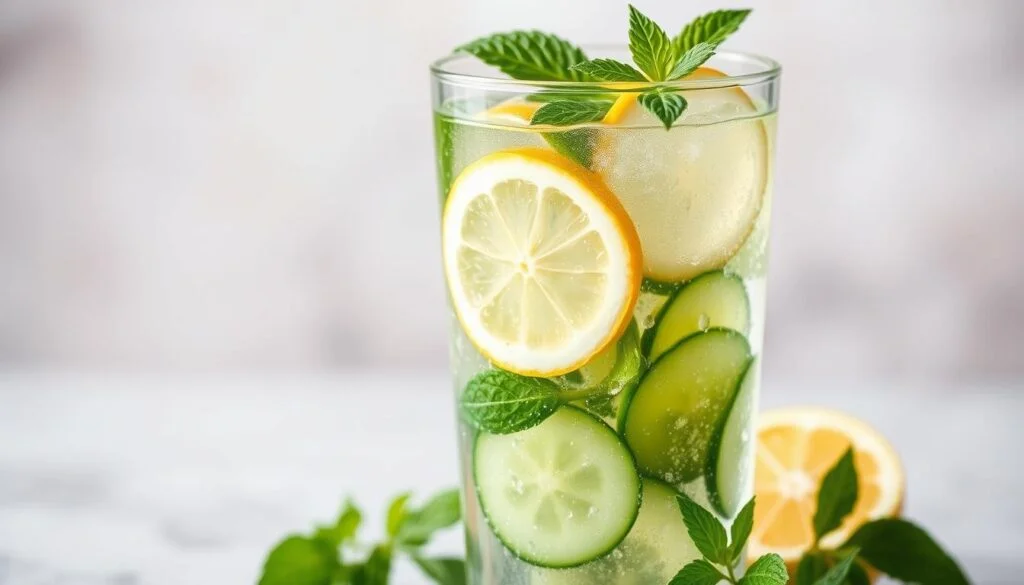
This drink combines lemon and cucumber’s diuretic effects with mint’s digestive benefits. Slice one lemon, half a cucumber, and add fresh mint leaves to water. Refrigerate for at least 30 minutes.

Ginger-Cinnamon Metabolism Booster

Try this spicy drink to boost your metabolism. Slice ginger and add a cinnamon stick to water. Let it infuse for 30 minutes. Ginger aids digestion, and cinnamon regulates blood sugar.

Berry-Infused Bloat Reducer

Enjoy the antioxidants of mixed berries in this detox water. Add a cup of mixed berries to water. Refrigerate for a few hours. Berries are anti-inflammatory.

Apple Cider Vinegar Elixir

Apple cider vinegar is great for digestion. Mix two tablespoons with water. Add lemon for flavor. This elixir aids digestion and reduces bloating.

Watermelon-Basil Flush

Stay hydrated with this sweet detox water. Dice half a watermelon and add basil leaves to water. Let it infuse for 30 minutes. Watermelon is a natural diuretic, and basil aids digestion.

Recipe Key Ingredients Benefits
Lemon-Cucumber Mint Refresher Lemon, Cucumber, Mint Diuretic, Digestive aid
Ginger-Cinnamon Metabolism Booster Ginger, Cinnamon Metabolism boost, Blood sugar regulation
Berry-Infused Bloat Reducer Mixed Berries Anti-inflammatory, Antioxidant
Apple Cider Vinegar Elixir Apple Cider Vinegar Digestive aid, Bloating reduction
Watermelon-Basil Flush Watermelon, Basil Diuretic, Digestive aid

Preparation and Storage Guidelines

The secret to a strong detox water is in how you prepare and store it. To make the most of your DIY detox water, follow these tips.

Essential Equipment

You’ll need a large pitcher, a strainer or fine-mesh sieve, and fresh ingredients to make detox water. Choose a glass pitcher to avoid any chemical reactions.

Step-by-Step Preparation Methods

Begin by washing and slicing your fruits, herbs, or veggies. Put them in the pitcher with water and chill it in the fridge. Let it sit for at least 30 minutes to a few hours.

Storage Tips for Maximum Potency

Keep your detox water cold in the fridge to keep it fresh. It’s best to drink it within 24 hours. After that, the ingredients may lose their strength or get contaminated.

Creating an Effective Detox Water Routine

Drinking detox water at the right times and in the right amounts can help you achieve a flat belly. Here are some tips to make the most of your detox water.

Optimal Consumption Times

Start your day by drinking detox water first thing in the morning to boost your metabolism. You can also have it before meals to control hunger and aid digestion.

Recommended Daily Intake

Try to drink at least 8 cups (64 oz) of detox water each day. Adjust this based on your personal needs and how active you are.

Integrating with Meal Planning

  • Drink detox water with nutrient-rich meals to boost its benefits.
  • Don’t drink detox water with meals that are full of processed foods or sugars.

Complementary Habits for Enhanced Results

To get the most out of DIY detox water, adding other habits to your day is key. A complete plan includes eating right, staying active, and managing stress. These steps can make detox water work better at cutting down belly bloating.

Supportive Dietary Changes

Eating a balanced diet full of fiber, fruits, and veggies helps with weight loss and less bloating. Adding more potassium from foods like bananas and greens can also cut down on water retention. A health expert says, “Eating too much processed food can cause bloating and water retention.”

“A healthy diet is key to reducing bloating.”

Physical Activities That Reduce Bloating

Doing regular exercise, like yoga or brisk walking, boosts digestion and fights bloating. Exercise also boosts your overall health, making detox water more effective.

Stress Management Techniques

Stress can make bloating worse. Using stress-reducing methods like meditation or deep breathing can help. As shown in the image below, adding these habits to your day is easy and works well.

Maximizing Your Weight Loss Journey with DIY Detox Water

Adding DIY detox water to your daily routine can help a lot with weight loss. It’s easy to do and can make your belly look flatter. Knowing why your belly gets bloated and how to stop it is key. Using the right ingredients and how you make it can really help.

Ingredients like cucumber, ginger, and lemon are great for reducing bloating and speeding up your metabolism. Mixing these in different ways and drinking them can really show you the benefits. Drinking detox water with healthy food, exercise, and managing stress can make your weight loss even better.

Using DIY detox water regularly can be a big step towards a flatter belly and better health. It’s a simple way to take care of yourself and your body.

FAQ

What is DIY detox water?

DIY detox water is a refreshing drink. It’s made with fruits, herbs, and vegetables. These ingredients help cleanse the body and aid in weight loss.

How does detox water help in achieving a flat belly?

Detox water aids in getting a flat belly by reducing bloating. It also improves digestion and boosts metabolism. Ingredients like cucumber, ginger, and lemon are key.

Can I drink detox water every day?

Yes, you can have detox water daily. But, drink it in moderation, about 1-2 liters a day. Vary the ingredients to avoid too much of any one thing.

How long does it take to see results from drinking detox water?

Seeing results from detox water varies. It depends on your diet, exercise, and health. But, you might notice improvements in a few weeks.

Can I store detox water for later use?

Yes, you can store detox water in the fridge for up to 24 hours. But, it’s best to drink it fresh for the best taste and benefits.

Are there any side effects of drinking detox water?

Detox water is usually safe. But, some might have allergic reactions or digestive issues from certain ingredients. Watch how your body reacts.

Can I combine detox water with other weight loss methods?

Yes, you can use detox water with a healthy diet, exercise, and stress management. This combo can help you achieve a flat belly and weight loss.

Is detox water a replacement for regular water?

No, detox water is not a replacement for regular water. It’s meant to be a supplement. It adds extra benefits from its ingredients to your hydration routine.

Menopause Belly? Try This at Night

Many women notice a big change in their body shape during menopause. This change is often called “menopause belly.” It can be really tough to deal with.

A nighttime routine is key to losing belly fat. By adding simple habits to your evening, you can help your body burn fat better. This can also boost your overall health.

It’s important to understand how menopause affects weight gain. As women get older, their metabolism slows down. This can cause fat to build up around the belly.

Key Takeaways

  • Menopause can cause changes in body shape, leading to belly fat.
  • A consistent nighttime routine can aid in belly fat reduction.
  • Simple evening habits can improve overall health and fat burning.
  • Understanding menopause and its effects on the body is crucial.
  • A well-planned nighttime routine can lead to a healthier lifestyle.

The Menopause-Belly Connection

Women often notice changes in their body shape during menopause, especially around the belly. This isn’t just about looks; it’s a sign of hormonal shifts affecting fat storage.

Menopause brings a drop in estrogen, which changes how fat is stored. Before menopause, estrogen helps fat go to the hips and thighs. But with less estrogen, fat moves to the belly, causing more belly fat.

How Hormonal Changes Affect Fat Distribution

Hormonal changes in menopause affect where and how fat is stored. The drop in estrogen leads to more belly fat. It also changes how the body handles fat and metabolism. This can make the body shape more android, with fat around the belly, raising health risks.

Research links lower estrogen to more visceral fat, fat around organs. This fat is risky because it’s linked to heart disease and diabetes.

Why Belly Fat Becomes Stubborn After 45

Belly fat gets harder to lose after 45 because of hormonal, aging, and lifestyle changes. As women age, their metabolism slows, making it easier to gain weight. The loss of muscle and gain of fat, especially in the belly, makes belly fat stubborn.

Stress and poor sleep, common in menopause, also add to belly fat. They increase cortisol, a hormone that stores fat in the belly.

The Science of Nighttime Metabolism

Our bodies process fat differently at night. This is key for managing weight, especially during menopause. It affects how we store or burn fat.

At night, our bodies do important work. This work is shaped by sleep quality, hormones, and lifestyle.

How Sleep Affects Fat Storage and Burning

Sleep is vital for fat control. Lack of sleep raises cortisol, a fat-storing hormone. But good sleep balances hunger hormones, aiding weight control.

  • Adequate Sleep: Helps in regulating hunger hormones.
  • Sleep Deprivation: Leads to increased cortisol levels.
  • Quality Sleep: Enhances the body’s ability to burn fat.

The Role of Cortisol in Nighttime Fat Accumulation

Cortisol, or the “stress hormone,” affects fat storage at night. High cortisol from stress or poor sleep increases belly fat. Controlling cortisol through stress relief and sleep is key to avoiding night fat gain.

  1. Practice stress-reducing activities, such as meditation or yoga.
  2. Ensure you get 7-8 hours of sleep per night.
  3. Avoid stimulating activities before bedtime.

Knowing how nighttime metabolism works helps us manage weight, especially in menopause. It guides us in making choices that support our weight goals.

Menopause Belly? Try This at Night

Creating a nightly routine can really help women with menopause symptoms. A good evening plan can help with the menopause belly and improve sleep. It also helps you relax better.

The Complete Nighttime Routine Overview

A good nighttime routine for menopausal women includes a few important steps. First, set a regular sleep time. Then, do something calming before bed, like reading or meditating. Also, eat a healthy dinner, but not too close to bedtime.

Activity Timing Benefits
Dinner 2-3 hours before bed Avoids discomfort and indigestion
Relaxation Technique 1 hour before bed Reduces stress and cortisol levels
Sleep Consistent bedtime Improves sleep quality

Why Evening Habits Are Crucial During Menopause

Evening habits are very important for managing menopause symptoms. A calming routine before bed can help with hot flashes and night sweats. Consistency is key for positive changes.

Setting Up Your Bedroom for Success

Having a sleep-friendly bedroom is crucial. Make sure it’s cool, dark, and quiet. Use blackout curtains, a white noise machine, or a comfy mattress to improve sleep. A well-prepared bedroom is essential for a good night’s sleep.

By following these tips, women can manage their menopause symptoms better, including the menopause belly. A consistent and calming nighttime routine is a powerful tool in this journey.

Evening Nutrition Strategies

Evening nutrition is key for managing menopause symptoms, like belly fat. A balanced diet in the evening helps regulate hormones and improves sleep. It also supports overall health.

The Ideal Dinner Plate for Menopausal Women

For menopausal women, creating an ideal dinner plate is crucial. It should have protein, healthy fats, and complex carbs. Lean proteins like chicken, fish, or tofu help keep muscles strong. Complex carbohydrates like brown rice or whole-grain bread give lasting energy.

Foods That Fight Belly Fat

Adding foods that fight belly fat to your dinner is beneficial. Some good examples are:

  • Leafy greens like spinach and kale
  • Cruciferous vegetables such as broccoli and cauliflower
  • Fatty fish rich in omega-3 fatty acids
  • Legumes like lentils and chickpeas

Foods to Avoid After 6 PM

Staying away from certain foods after 6 PM can improve sleep and reduce belly fat. It’s wise to limit or avoid:

  • Sugary snacks and drinks
  • Caffeine
  • High-fat foods
  • Spicy foods that can cause discomfort

Timing Your Last Meal for Optimal Results

Timing your last meal is important for sleep and metabolism. Eating your last meal 2-3 hours before bed helps with digestion and blood sugar control. This timing also ensures a good night’s sleep, which is vital for health and managing menopause symptoms.

Nighttime Teas and Supplements

Menopause can be tough, but some teas and supplements help. Women can use herbal teas and supplements to ease symptoms. This can help with belly fat and other issues.

Herbal Teas That Target Abdominal Fat

Some herbal teas help with fat loss and menopause symptoms. Green tea boosts metabolism. Chamomile tea improves sleep, which helps with weight. Peppermint tea aids digestion, reducing bloating.

Evidence-Based Supplements for Menopause Symptoms

Some supplements help with menopause symptoms. Omega-3 fatty acids reduce inflammation and mood swings. Probiotics improve digestion, cutting down on bloating. Always talk to a doctor before starting supplements.

Creating a Supplement Schedule

For supplements to work best, take them at the same time every day. Here’s a table to help plan your schedule:

Supplement Dosage Timing
Omega-3 1000mg With dinner
Probiotics 1 billion CFU Before bed
Calcium 500mg With breakfast and dinner

Adding the right teas and supplements to your routine can ease menopause symptoms. It may also help with belly fat. Always check with a healthcare professional before starting any new supplements.

Pre-Bedtime Movement Routine

A good pre-bedtime exercise routine can help with menopause belly. Gentle movements before bed can improve sleep and reduce stress. This section will look at the benefits and offer tips for starting.

5-Minute Belly-Targeting Stretches

Simple stretches before bed can ease menopause symptoms. Belly-targeting stretches are great for reducing belly fat. Here are some stretches to try each night:

  • Standing Side Stretch: Stand with feet hip-width apart and stretch to one side, then the other.
  • Seated Forward Fold: Sit on the floor with legs extended and fold forward, stretching the back and abdomen.
  • Cat-Cow Stretch: On hands and knees, alternate between arching the back and rounding it.

Gentle Yoga Poses for Hormone Balance

Gentle yoga can balance hormones and ease menopause symptoms. Poses like Child’s Pose and Reclined Pigeon Pose target the belly and relax the body. Adding these to your routine can boost your well-being.

The Importance of Not Overexercising at Night

While a pre-bedtime routine is good, avoid too much exercise at night. Overexertion can keep you awake. Keep your routine calm and relaxing for a good night’s sleep.

Adding a pre-bedtime routine to your day can help manage menopause belly and improve health.

Optimizing Sleep Quality

For menopausal women, good sleep is key to health and less belly fat. Sleep helps regulate hormones and fat distribution. It’s vital for overall wellbeing.

The Perfect Sleep Environment for Menopausal Women

A sleep-friendly environment is crucial. Keep your bedroom cool, dark, and quiet. Use blackout curtains, a white noise machine, or a fan.

A cooler room can fight night sweats and hot flashes. These are common menopause issues.

Managing Night Sweats and Hot Flashes

Night sweats and hot flashes disrupt sleep. Wear light, breathable pajamas and use moisture-wicking bedding. Try relaxation techniques like deep breathing or meditation before bed.

Use a cool compress or cold pack on pulse points for relief. Avoid spicy foods, caffeine, and alcohol at night. They can trigger night sweats and hot flashes.

Sleep Duration and Timing for Belly Fat Reduction

Getting 7-9 hours of sleep is key for weight management. Go to bed before midnight and stick to a sleep schedule. This improves sleep quality.

Try to sleep between 10 PM and 11 PM. This helps regulate your body’s rhythms. It can improve sleep quality and help reduce belly fat.

Sleep Strategy Benefit
Cool Bedroom Reduces night sweats and hot flashes
Consistent Sleep Schedule Improves sleep quality and hormone regulation
Relaxation Techniques Helps manage stress and promotes better sleep

Stress Reduction Techniques Before Bed

Managing stress before sleep is crucial for easing menopause symptoms like belly fat. Hormonal shifts in menopause can raise stress levels, impacting sleep and fat distribution. Using stress-reducing methods before bed can help counter these effects.

10-Minute Meditation for Cortisol Management

Meditation is great for controlling cortisol, which can lead to belly fat. A 10-minute meditation session before bed can calm your mind and body. Find a quiet spot, sit comfortably, and concentrate on your breath. You can use a guided app or just watch your breathing.

Benefits of Meditation:

  • Reduces cortisol levels
  • Improves sleep quality
  • Enhances overall well-being

Progressive Muscle Relaxation for Belly Tension

Progressive muscle relaxation (PMR) involves tensing and relaxing muscles. It helps ease belly tension and relaxes you. Start by tensing your toes, holding for a few seconds, and then release. Move up your body, tensing and relaxing each group.

Tips for Effective PMR:

  1. Begin with your toes and work your way up
  2. Hold each muscle group for 5-10 seconds before releasing
  3. Focus on your breathing to enhance relaxation

Journaling to Release Stress and Improve Sleep

Journaling before bed can help release stress and clear your mind. Writing down your thoughts and feelings can process the day and prepare for sleep. Keep your journaling brief and focused on the present.

Adding these stress-reducing techniques to your bedtime routine can improve sleep quality. This may also help reduce menopause symptoms, including belly fat.

Common Nighttime Mistakes That Worsen Menopause Belly

During menopause, hormonal changes can make belly fat worse. Knowing the nighttime mistakes that make it worse is key. This knowledge helps manage menopause symptoms better.

Late-Night Eating Habits to Break

Eating big meals or snacks late at night can cause weight gain, especially around the belly. It’s important to stop eating 2-3 hours before bed. This lets your body digest food and helps you sleep better.

Technology Use and Blue Light Exposure

Using phones, tablets, and computers before bed can mess with your sleep. This is because blue light from screens can stop your body from making melatonin. Bad sleep can make you gain belly fat. Try to limit screen time before bed or wear blue light glasses.

Alcohol and Its Effect on Menopausal Belly Fat

Drinking alcohol close to bedtime can mess with your sleep and make belly fat worse. It can also mess with hormone levels, making menopause symptoms worse. Try to cut down on or avoid alcohol in the evening.

Nighttime Mistake Effect on Menopause Belly Corrective Action
Late-Night Eating Increased belly fat due to poor digestion and disrupted sleep Finish eating 2-3 hours before bedtime
Blue Light Exposure Poor sleep quality leading to increased cortisol and belly fat Limit screen time before bed or use blue light filtering glasses
Alcohol Consumption Disrupted sleep and increased fat storage around the abdomen Reduce or avoid alcohol intake in the evening

Knowing and fixing these nighttime mistakes can help women going through menopause. It can help manage symptoms and reduce belly fat.

Conclusion

Creating a good nighttime routine is key for managing menopause symptoms, like belly fat. By adding balanced dinners, herbal teas, stretches, and stress-reducing activities, women can handle this stage better.

A nighttime routine helps with belly fat and improves menopause management. It’s important to make your sleep area comfy, avoid eating late, and cut down on tech before bed.

Adopting these habits can lead to better sleep, less stress, and a healthier life. Begin your journey to a balanced life during menopause with these simple, yet powerful changes in your nighttime routine.

FAQ

What is menopause belly?

Menopause belly is when fat builds up around the belly during menopause. This happens because of hormonal changes.

How do hormonal changes during menopause affect fat distribution?

Hormonal changes, like a drop in estrogen, cause fat to move to the belly area. This is why belly fat increases.

What role does cortisol play in nighttime fat accumulation?

Cortisol, a stress hormone, helps store fat in the belly. This is especially true when cortisol levels are high at night.

What is the ideal dinner plate for menopausal women?

The best dinner plate has protein, healthy fats, and complex carbs. Include foods like leafy greens and omega-3s to fight belly fat.

Are there specific teas that can help target abdominal fat?

Yes, teas like peppermint, chamomile, and green tea can help reduce belly fat. They also promote relaxation.

Can supplements help alleviate menopause symptoms?

Supplements like omega-3s, vitamin D, and probiotics can manage menopause symptoms. This includes belly fat.

What are some gentle yoga poses for hormone balance?

Yoga poses like child’s pose, downward-facing dog, and cobra pose balance hormones. They also reduce stress.

How can I create a sleep-conducive environment?

For a good sleep environment, keep your bedroom cool, dark, and quiet. Choose a comfy mattress and pillows.

What are some stress reduction techniques to practice before bed?

Try meditation, progressive muscle relaxation, or journaling before bed. They help reduce stress and improve sleep.

How does late-night eating affect menopause belly?

Eating late can mess with digestion and increase belly fat. This makes menopause belly worse.

Can alcohol consumption affect menopausal belly fat?

Yes, drinking alcohol can increase belly fat. It disrupts hormone balance and can lead to poor sleep.

One Cup Before Bed Melts Belly Fat

Losing weight can be tough, but the right weight loss drinks can help a lot.

Drinking a certain drink before bedtime can help with belly fat reduction. Some drinks boost your metabolism and burn fat while you sleep. This makes it easier to lose weight.

Adding this habit to your daily routine is a great first step. It can help you become slimmer and healthier.

Key Takeaways

  • Drinking a specific beverage before bed can aid in belly fat loss.
  • Certain drinks can enhance metabolism and burn fat during sleep.
  • Incorporating weight loss drinks into your daily routine can support weight loss goals.
  • A simple change in your daily habit can lead to significant weight loss results.
  • A healthier lifestyle is achievable with the right combination of diet and drink.

The Science Behind Nighttime Fat Burning

Nighttime fat burning is a fascinating process. It can be influenced by your metabolism and evening habits. As we sleep, our body burns fat, but the rate can change based on several factors.

How Your Metabolism Works During Sleep

During sleep, your metabolism doesn’t stop; it just slows down a bit. Your body’s metabolic rate stays active, burning calories and fat. The efficiency of this process depends on your metabolic health and bedtime habits.

The Connection Between Evening Habits and Weight Loss

Your evening habits are key to fat burning during sleep. Drinking certain beverages before bed can help. Drinks that boost your metabolism or aid digestion can lead to better fat loss.

Evening Habit Impact on Nighttime Fat Burning
Drinking green tea Boosts metabolism
Consuming protein-based smoothies Supports muscle recovery and fat loss

Understanding how your metabolism works during sleep and improving your evening habits can boost your weight loss journey.

One Cup Before Bed Melts Belly Fat: The Truth Behind the Claim

Drinking one cup before bed to melt belly fat has caught a lot of attention. But what does science really say? The idea that a drink can help with belly fat reduction is interesting. Yet, we must look at the evidence to see if it’s true.

Scientific Evidence Supporting Nighttime Drinks for Weight Loss

Studies on fat-burning beverages have found some promising results. For example, green tea might help with abdominal fat loss. This is thanks to its catechin content.

Drink Key Ingredient Effect on Abdominal Fat
Green Tea Catechins Boosts metabolism, aids in fat burning
Apple Cider Vinegar Drink Acetic Acid May help reduce body fat percentage
Cinnamon and Honey Tea Cinnamaldehyde May improve insulin sensitivity

Understanding How Certain Beverages Target Abdominal Fat

Some drinks aim to target abdominal fat in different ways. They might boost metabolism, reduce inflammation, or cut down on hunger. For instance, ginger drinks have anti-inflammatory effects.

Separating Facts from Marketing Hype

Even though some drinks might have science on their side, it’s key to know the difference between real benefits and marketing tricks. People should be careful of exaggerated claims. Always look for products with solid research behind them.

Top 5 Fat-Burning Beverages to Drink Before Bedtime

Drinking the right drinks before bed can help you lose weight. Some drinks boost your metabolism, reduce inflammation, and burn belly fat while you sleep.

Green Tea and Its Catechin Content

Green tea is famous for its catechin, especially EGCG. It boosts metabolism and helps burn fat. Studies show it can cut down belly fat.

Apple Cider Vinegar Drinks

Apple cider vinegar may curb hunger and speed up metabolism. Drinking it with water before bed can burn fat while you sleep.

Cinnamon and Honey Tea

Cinnamon and honey tea is calming and helps control blood sugar and metabolism. It aids in weight loss.

Lemon Water with Ginger

Lemon water with ginger improves digestion and metabolism. Lemon’s antioxidants and ginger’s anti-inflammatory effects make it a powerful fat-burning drink.

Protein-Based Nighttime Smoothies

Protein smoothies before bed help muscles recover and keep you full. They reduce the chance of midnight snacks.

Beverage Key Ingredients Benefits
Green Tea Catechins, EGCG Boosts metabolism, burns belly fat
Apple Cider Vinegar Acetic acid Suppresses appetite, improves metabolism
Cinnamon and Honey Tea Cinnamon, honey Regulates blood sugar, improves metabolism
Lemon Water with Ginger Lemon, ginger Enhances digestion, boosts metabolism
Protein-Based Smoothies Protein powder Aids in muscle recovery, reduces late-night snacking

Key Ingredients That Target Stubborn Belly Fat

To tackle belly fat, knowing the right ingredients in your drinks is key. These ingredients boost fat burning, cut down on bloating, and help you feel full. This makes losing weight easier.

Natural Compounds That Enhance Fat Metabolism

Some natural compounds help burn fat better. For example, catechins in green tea increase your body’s fat-burning ability. Ginger also boosts your metabolic rate, helping you lose fat.

Anti-Inflammatory Ingredients That Reduce Bloating

Anti-inflammatory ingredients can lessen bloating, making weight loss easier. Turmeric and its curcumin have anti-inflammatory effects, reducing water retention and bloating. Peppermint soothes your stomach, further reducing bloating.

Appetite-Suppressing Elements for Reduced Late-Night Cravings

Ingredients that suppress appetite can stop late-night cravings. Protein keeps you full longer. Fiber-rich ingredients slow digestion, reducing the urge to snack at night.

Adding these ingredients to your drinks can help your body burn belly fat better. It also boosts your metabolism and reduces cravings.

How to Prepare Your Bedtime Fat-Burning Drink

Unlocking nighttime fat burning starts with a simple drink before bed. Choose from fat-burning beverages like green tea or a protein-based smoothie.

Step-by-Step Recipe Instructions

To make a green tea, boil water and pour it over a green tea bag in a cup. Let it steep for 2-3 minutes. Then, remove the tea bag and add a squeeze of lemon for taste.

For a protein-based smoothie, mix your favorite protein powder with almond milk, spinach, and berries in a blender. Blend until it’s smooth and enjoy.

Timing Considerations for Maximum Effectiveness

Drink your bedtime fat-burning drink 30 minutes to 1 hour before sleep. This lets your body process it and start its effects while you sleep.

Customizing Flavors Without Reducing Benefits

You can change your drink’s flavor without losing its fat-burning benefits. Adding a bit of cinnamon can make it taste better without extra calories. As

“The right combination of ingredients can make a significant difference in your weight loss journey.”

By following these steps and tips, you can make a bedtime fat-burning drink. It will taste great and help with your weight loss tips and goals.

Realistic Expectations and Timeline for Results

Getting a slimmer waist is more than just drinking special drinks before bed. Adding fat-burning drinks to your evening can help. But, knowing how long it takes to see results is key to staying motivated and reaching your weight loss goals.

What Science Says About Fat Loss Rates

Studies show losing 1-2 pounds a week is safe and doable. This means losing 4-8 pounds a month. Drinking fat-burning drinks before bed can boost your metabolism and help burn fat while you sleep.

Tracking Progress Beyond the Scale

It’s important to watch your progress in more ways than just weight. Take body measurements, check your body fat percentage, and take progress photos. Also, pay attention to how you feel and any health improvements. These can be big motivators.

Tracking Method Description Frequency
Weight Measure body weight Weekly
Body Measurements Measure waist, hips, etc. Monthly
Progress Photos Take photos of progress Monthly

Creating a Sustainable Nighttime Routine

To get the most from your fat-burning drink, make a consistent bedtime routine. Go to bed at the same time every night. Avoid screens before bed and create a calm bedtime space.

By mixing a healthy bedtime routine with fat-burning drinks, you can boost your weight loss. This makes your journey to a slimmer waist more sustainable.

Complementary Lifestyle Changes for Enhanced Results

For the best weight loss, mix your nighttime fat-burning drinks with healthy eating, regular exercise, and good sleep. These drinks help burn belly fat, but a full plan works better.

Dietary Adjustments That Amplify Fat Loss

Changing your diet can make your nighttime drinks work better. Less sugar and more fiber are key. Eating whole foods like veggies, fruits, lean meats, and grains helps you lose weight.

  • Eat whole, unprocessed foods for more nutrients.
  • Drink less sugary drinks and eat less sugary foods.
  • Eat more fiber from foods like legumes, greens, and grains.

Exercise Recommendations to Target Belly Fat

Exercise is key for burning belly fat and making your drinks more effective. Aerobic exercises like walking, jogging, or cycling burn fat. Strength training builds muscle, which boosts your metabolism.

  1. Do at least 150 minutes of moderate aerobic exercise weekly.
  2. Do strength training twice a week to build muscle.
  3. Try high-intensity interval training (HIIT) for better fat burning.

Sleep Optimization Techniques

Good sleep is vital for losing weight and staying healthy. Keep a regular sleep schedule and have a calming bedtime routine. Avoid caffeine and screens before bed to sleep better.

  • Keep the same sleep schedule every day, even on weekends.
  • Have a relaxing bedtime routine, like reading or meditation.
  • Stay away from screens and caffeine before bed.

By adding these lifestyle changes to your nighttime drinks, you’ll see better and lasting weight loss.

Conclusion

Drinking one cup before bed can help melt belly fat by boosting your metabolism. The right drinks can make a big difference in losing belly fat. Adding specific beverages to your evening routine can greatly impact your weight loss journey.

Choose from our top 5 fat-burning beverages and make lifestyle changes to get slimmer and healthier. Start by adding green tea or apple cider vinegar to your bedtime routine. Pair these habits with healthy eating and exercise to see better results.

Consistency is crucial for lasting change. Make these habits a daily part of your life. With the right approach, you can say goodbye to stubborn belly fat and hello to a more confident you. Start your journey tonight and see the power of targeted weight loss drinks and a healthier lifestyle.

FAQ

What are the best drinks to consume before bedtime for weight loss?

Drinks like green tea, apple cider vinegar, and cinnamon and honey tea are great. Also, lemon water with ginger and protein smoothies are good choices.

How do these nighttime drinks aid in fat loss?

These drinks boost fat burning, reduce bloating, and cut hunger. This helps with weight loss.

Can I customize the flavors of these drinks without reducing their effectiveness?

Yes, you can change the flavors by adding spices or sweeteners. Just don’t add too much sugar or calories.

How long does it take to see results from drinking these beverages before bedtime?

Results vary, but losing 1-2 pounds a week is common. Be patient and keep a healthy lifestyle for best results.

Are there any dietary adjustments I should make to amplify fat loss?

Yes, eat fewer calories, more protein, and fiber-rich foods. This can boost fat loss.

Can exercise help target belly fat when combined with these nighttime drinks?

Yes, exercise, especially core and aerobic workouts, targets belly fat. Pair it with these drinks for better results.

How important is sleep optimization when using these nighttime drinks for weight loss?

Sleep is key for weight loss. Poor sleep can mess with hunger hormones, leading to weight gain.

Are the ingredients in these nighttime drinks backed by scientific evidence?

Yes, ingredients like green tea’s catechins and protein are scientifically proven to aid in weight loss.

Beginner’s Keto Plan That Actually Works

Beginner’s Keto Plan That Actually Works

The ketogenic diet is becoming more popular for weight loss. It works by cutting down carbs and eating more fat. This puts your body into ketosis, where it uses fat for energy instead of carbs.

This change in how your body works can lead to losing a lot of weight. It also improves your health in many ways. The keto diet can make you think clearer and reduce inflammation.

To lose weight and stay healthy, following a good keto plan is key. It’s important to know how the ketogenic diet works and use it right.

Key Takeaways

  • The keto diet induces a metabolic state called ketosis, where the body burns fat for energy.
  • Reducing carbohydrate intake and increasing fat consumption are crucial for achieving ketosis.
  • The keto diet can lead to significant weight loss and improved overall health.
  • Enhanced mental clarity and reduced inflammation are among the benefits of the keto diet.
  • A well-structured keto plan is essential for achieving weight loss goals and maintaining a healthy lifestyle.

Understanding the Ketogenic Diet Basics

The ketogenic diet is simple yet powerful. It changes your body’s energy source from carbs to fats. This is called ketosis.

Ketosis happens when your body uses up carbs and starts burning fat for energy. This is key to the keto diet’s success.

What Is Ketosis and How Does It Work?

Ketosis is when your body uses fat for energy instead of carbs. You get this by eating less carbs and more fat. This leads to the creation of ketones.

The Science Behind Fat Adaptation

When your body starts using fat for energy, it gets better at it. This is important for losing weight and feeling more energetic.

Transitioning from Carb-Burning to Fat-Burning

Changing your diet to use fat takes a few weeks. It’s important to watch your progress and adjust your diet as needed.

Timeline for Becoming Keto-Adapted

Week Progress
1 Initial adaptation, potential keto flu
2-3 Increased fat burning, improved energy
4+ Full keto adaptation, sustained benefits

Keto experts say, “The key to successful keto adaptation is patience and consistent tracking of your macros.”

“The keto diet is not just about weight loss; it’s a metabolic shift that can improve overall health.” – Keto Expert

Health Benefits of Following a Keto Diet

The keto diet cuts down on carbs, leading to a metabolic shift. This shift brings many health benefits. It’s why many people choose this diet for their health.

Weight Loss and Fat Burning

The keto diet is great for weight loss. It makes your body burn fat for energy. This happens because you eat more fat, moderate protein, and less carbs.

Improved Energy and Mental Clarity

People on the keto diet often feel more energetic and clear-minded. This is because fat is a steady energy source. It avoids the ups and downs of carb energy.

Other Health Advantages

The keto diet also has other benefits, including:

  • Blood sugar management
  • Reduced inflammation

Blood Sugar Management

The keto diet helps control blood sugar. It does this by cutting down on carbs. This makes it good for managing diabetes.

Reduced Inflammation

Research shows the keto diet can lower body inflammation. This is good for fighting off chronic diseases.

Health Benefit Description
Weight Loss Reducing body fat through fat burning
Improved Energy Consistent energy supply from fat metabolism
Blood Sugar Management Regulating blood sugar levels through reduced carbohydrate intake

“The keto diet is a powerful tool for weight loss and overall health improvement.”

Common Mistakes That Derail Beginner’s Keto Plans

A well-planned keto diet is key to staying in ketosis. But, what mistakes can stop beginners from reaching their goals? Many struggle with weight loss because of simple errors.

Not Tracking Macros Properly

One big mistake is not tracking macronutrients right. This can kick you out of ketosis. Use a keto meal plan to keep track of what you eat.

Overlooking Hidden Carbs

Hidden carbs can block your progress. Watch out for carbs in sauces, condiments, and processed foods.

Neglecting Electrolytes

Ignoring electrolytes can cause the keto flu. Make sure you get enough sodium, potassium, and magnesium.

Signs of Electrolyte Imbalance

Look out for fatigue, muscle cramps, and dizziness. Adjust your electrolyte intake to fix these issues.

A Beginner’s Keto Plan That Actually Works

Starting the keto diet can be tough. A clear plan makes it easier. It guides you through the first steps, helps you adjust, and keeps you on track.

Week 1: Transitioning Into Ketosis

The first week is key for a good start. It involves two main steps:

Gradually Reducing Carbs

Begin by slowly cutting down on carbs. This lets your body get used to a new energy source.

Increasing Healthy Fat Intake

At the same time, eat more healthy fats. They give your body the energy it needs.

Day Carb Intake (grams) Fat Intake (grams)
1-2 100 50
3-4 50 70
5-7 20 100

Week 2-3: Adapting and Adjusting

By weeks two and three, your body should be getting used to ketosis. Keep an eye on how you’re doing. Make changes to your diet if needed, and watch out for keto flu symptoms.

Week 4 and Beyond: Maintaining Ketosis

After a month, keeping up with ketosis takes work. Stick to whole foods, healthy fats, and the right amount of protein. Always check your macros and tweak your diet to stay in keto zone.

Essential Keto Foods to Stock Your Kitchen

Having the right foods in your kitchen is crucial for a keto diet. A well-stocked kitchen helps you stay on track and get the nutrients you need.

Proteins and Healthy Fats

Proteins and healthy fats are key for a keto diet. They keep you full and give you the energy you need.

Quality Meat and Seafood Options

Choose grass-fed beef, pasture-raised chicken, and wild-caught fish for your diet. They’re packed with protein and healthy fats.

Plant-Based Fat Sources

If you prefer plant-based options, avocados, olive oil, and coconut oil are great. They’re full of healthy fats.

Low-Carb Vegetables

Low-carb veggies are important for fiber and nutrients. Some top picks are:

  • Leafy greens like spinach and kale
  • Cruciferous veggies like broccoli and cauliflower
  • Other low-carb choices like bell peppers and cucumbers

Keto-Friendly Snacks and Beverages

Staying hydrated and having keto snacks ready can keep you on track. Try keto coffee, nuts, and cheese for snacks.

7-Day Meal Plan for Keto Beginners

A 7-day meal plan is a great start for the keto diet. It guides beginners into ketosis, where your body uses fat for energy, not carbs.

Breakfast Options

Choosing a keto-friendly breakfast is key. Here are some tasty options:

Quick Morning Meals

For quick mornings, try scrambled eggs with spinach or avocado and bacon. They’re fast and full of nutrients.

Weekend Breakfast Ideas

Weekends offer time for more complex breakfasts. Try keto pancakes with almond flour or a breakfast skillet with sausage and veggies.

Lunch and Dinner Recipes

Lunch and dinner should include whole foods like meats, fish, and veggies. Here are some ideas:

  • Grilled salmon with cauliflower rice
  • Beef stir-fry with broccoli and a keto sauce
  • Chicken Caesar salad with romaine and homemade dressing

Simple Snack Ideas

Snacking on keto is easy with these options:

  • Raw nuts and seeds
  • Cheese sticks or cottage cheese
  • Keto fat bombs with coconut oil and cream

Meal Prep Strategies

Meal prepping makes keto easier. Cook in bulk, portion, and store in containers for the week.

Tracking Progress and Overcoming Challenges

Keeping an eye on your progress and facing challenges is key to a successful keto diet. You’ll meet many obstacles on your keto journey. But, with the right strategies, you can beat them.

Managing Keto Flu Symptoms

The keto flu is a common issue when starting keto. To handle its symptoms, drink lots of water and eat more salt. Electrolyte-rich foods or supplements can help with headaches and tiredness.

Monitoring Ketosis Effectively

To know if you’re in ketosis, regular ketone testing is a must.

Using Ketone Testing Methods

There are many ways to test ketones, like urine strips, blood meters, and breath analyzers. Each has its own benefits and drawbacks. It’s important to pick the one that suits your lifestyle best.

Testing Method Accuracy Convenience
Urine Strips Moderate High
Blood Meters High Moderate
Breath Analyzers High High

Adjusting Your Plan When Plateaued

If you reach a plateau, check your macros and tweak your diet. Sometimes, a small change in carbs or protein can help you move forward.

Navigating Social Situations

Social events can be tough on a keto diet. But, with some planning, you can stay keto-friendly. Look for options like meat, veggies, and cheese. And don’t hesitate to ask about the menu before you go.

Conclusion

Following the beginner’s keto plan in this article can lead to ketosis. This results in significant weight loss and better health. The ketogenic diet is a smart way to burn fat for energy.

A good keto plan includes tracking macros, choosing the right foods, and watching progress. Knowing how ketosis works helps overcome diet challenges. This way, people can keep losing weight for a long time.

Starting a keto journey can change your life. It brings better energy, clearer thinking, and a healthier food relationship. With the right attitude and support, the keto lifestyle is rewarding.

FAQ

What is the keto diet and how does it work?

The keto diet is a diet low in carbs and high in fat. It makes your body burn fat for energy instead of carbs. By eating less carbs and more fat, your body starts using ketones for energy.

How long does it take to enter ketosis?

It takes different times for everyone to enter ketosis. It usually takes 2 to 7 days after eating less carbs and more fat.

What are the benefits of a keto diet?

A keto diet can help you lose weight and feel more energetic. It also improves mental clarity and blood sugar control. Many people feel healthier and happier on this diet.

How do I track my macros on a keto diet?

To track your macros, watch your carb, protein, and fat intake. Use a food diary or apps like MyFitnessPal to keep track. This helps you stay in keto mode.

What are some common mistakes to avoid on a keto diet?

Avoid not tracking macros, missing hidden carbs, forgetting electrolytes, and not drinking enough water. Knowing these mistakes helps you stay on track.

Can I have cheat days on a keto diet?

You can have cheat days, but it’s not recommended. It can throw you out of ketosis. If you do cheat, get back on keto quickly.

How do I manage keto flu symptoms?

To handle keto flu, drink plenty of water, eat more salt, and take electrolyte supplements. This helps with headaches, tiredness, and brain fog.

What are some keto-friendly foods to stock in my kitchen?

Stock up on meats, fish, avocados, olive oil, and nuts. Also, have low-carb veggies like leafy greens and broccoli ready.

How do I navigate social situations on a keto diet?

Plan ahead for social events by finding keto-friendly foods. Bring your own dishes if needed. This way, you can stick to your diet.

What 5 Minutes of Core Work Can Do to Your Waist

Doing just a few core exercises every day can really change your fitness and waist reduction goals. Adding a short, intense core training routine to your day can make a big difference.

Spending only 5 minutes a day on core exercises can make a big impact. It can make your core muscles stronger, improve your posture, and boost your physical stability. This simple fitness approach can be a big help for those wanting a slimmer waist.

Key Takeaways

  • Core exercises can significantly contribute to waist reduction.
  • A daily 5-minute core training routine can improve overall fitness.
  • Strengthening core muscles enhances posture and physical stability.
  • A short, intense core workout can be easily incorporated into a daily schedule.
  • Regular core exercises can lead to a slimmer waistline.

The Science Behind Core Training and Waist Reduction

Core training and a smaller waistline are connected through anatomy and physiology. Core exercises target muscles in your torso. This includes your abdominals, obliques, and lower back.

Understanding Your Core Muscles

Your core muscles are key for stability, balance, and athletic performance. The core includes several muscle groups. The rectus abdominis helps with flexion. The obliques aid in rotation. And the transverse abdominis, the deepest muscle, wraps around your spine and pelvis, offering compression and stability.

How Core Exercises Impact Your Waistline

Core exercises can greatly affect your waistline by strengthening and toning muscles around it. Regular core training improves your posture and muscle definition. It can also help reduce waist fat by boosting muscle activity and metabolic rate.

Knowing how core exercises work on your body helps you see their value. They are crucial for a slimmer, more toned waistline.

What 5 Minutes of Core Work Can Do to Your Waist

Doing a 5-minute core workout every day can surprise you with great benefits. It strengthens your core, improving your waist and overall fitness. This small daily effort can make a big difference.

Immediate Benefits

One of the immediate benefits of core work is better posture. Your spine gets stronger, leading to better alignment and less back strain. Core exercises also boost your energy by working many muscles at once, helping your metabolism.

Long-term Transformations

With regular core training, you’ll see big changes over time. Your waist will look slimmer as your core muscles grow. This also boosts your athletic performance by giving you a stable base for movement.

Realistic Expectations

It’s key to have realistic expectations when starting a new workout. While 5 minutes of core work daily can show improvements, remember to eat well and stay active too. Here’s a table showing what you might see at different times:

Timeframe Expected Outcome
1-4 weeks Improved posture and increased energy
6-12 weeks Noticeable reduction in waist size and enhanced core strength
3-6 months Significant improvements in athletic performance and overall fitness

Knowing the benefits and setting realistic goals helps you get the most from your 5-minute core workout. You’ll enjoy a slimmer, healthier waistline.

The Most Effective 5-Minute Core Routines

Looking to boost your core strength and slim down your waist? A 5-minute workout can do wonders. Mix exercises that hit different muscles for a stronger, more stable core.

Plank Variations for Stability

Planks are great for core stability. Try side planks and inverted planks for a full workout. Proper form is key to avoid injuries and get the most out of your workout.

Dynamic Movements for Obliques

For obliques, try Russian twists and bicycle crunches. These moves boost core strength and improve rotation. Working your obliques can help define your waist.

Lower Abdominal Focused Exercises

Leg raises and reverse crunches target the lower abs. Lower abs can be tough to tone, but regular practice will show results.

Proper Form and Breathing Techniques

Keeping proper form and using good breathing techniques are crucial. They help you get the most from your workout and stay safe.

Common Mistakes to Avoid During Core Training

To get the most out of core exercises, it’s key to avoid common mistakes. Core training is vital for a slimmer waist. But, errors in form, overtraining, and inconsistency can ruin its effectiveness.

Form and Alignment Issues

Keeping proper form and alignment is crucial in core training. Poor form can make workouts ineffective and even cause injuries. For example, during planks, keep your body straight from head to heels.

Engaging your core muscles correctly is essential. This means pulling your belly button towards your spine and keeping it engaged during the exercise.

Overtraining vs. Consistency

Overtraining is a common error. It might seem like more is better, but it can cause burnout and injury. Instead, consistency is key. Regular, moderate core training can lead to significant improvements over time.

By avoiding these mistakes, you can make your core training routine more effective. This ensures you’re working towards your goal of a slimmer waist.

Tracking Progress and Maximizing Results

Tracking your core training progress is key to seeing better results in your waist reduction journey. It’s important to watch for different signs of success.

Measurable Indicators Beyond the Scale

Weight is not the only way to measure progress in core training. You can also see improvements in strength, endurance, and body composition.

  • Increased Strength: Being able to do more reps or hold poses longer.
  • Improved Endurance: Being able to keep going without getting tired as easily.
  • Changes in Body Composition: Losing body fat even if your weight doesn’t change.

Complementary Habits for a Slimmer Waist

Doing core exercises is just part of the equation. Other habits like regular exercise, managing stress, and eating mindfully can also help.

Nutritional Considerations

Eating right is crucial for your core training and waist goals. Eat lean proteins, whole grains, and lots of vegetables.

Nutritional Element Benefits Examples
Lean Proteins Helps muscles grow and repair Chicken, Fish, Tofu
Whole Grains Gives you energy that lasts Brown Rice, Quinoa, Whole Wheat
Vegetables Full of vitamins and minerals Broccoli, Spinach, Bell Peppers

By combining core training with good habits and nutrition, you can get the best results. This will help you achieve a slimmer waist.

Putting Core Training into Action

Adding just 5 minutes of core work to your day can change your waistline a lot. Learning about core training and its benefits can make you stronger and leaner.

Good core routines include planks, dynamic moves for your obliques, and exercises for your lower abs. Make sure to avoid mistakes like bad form and too much training. This will help you get the best results.

Tracking your progress and adding other healthy habits can help you get a slimmer waist. The benefits of core training are clear: a stronger core, a leaner waist, and less chance of injury.

Now, it’s time to start your core training. Begin today and see how a stronger, more resilient core can transform you.

FAQ

What are the benefits of incorporating 5 minutes of core work into my daily routine?

Adding 5 minutes of core work daily can improve your posture and boost energy. It also helps slim your waist and enhance athletic skills.

How do core exercises impact my waistline?

Core exercises can cut down waist fat and improve stability. They also enhance posture, making you look leaner and more toned.

What are some effective 5-minute core routines I can try?

Try plank variations, dynamic movements for obliques, and exercises like leg raises and Russian twists. These are great for a quick core workout.

How can I track my progress beyond weight measurements?

Track your progress by measuring strength and endurance gains. Also, monitor body composition changes and take progress photos.

What are some common mistakes to avoid during core training?

Avoid form and alignment issues, overtraining, and not engaging core muscles properly. These mistakes can hinder your progress.

How can I maximize my results from core training?

Focus on consistency, proper form, and breathing. Also, eat well and stay active with cardio to see better results.

Are there any nutritional considerations I should keep in mind for a slimmer waist?

Yes, eat a balanced diet low in processed foods and sugars. Include more protein, healthy fats, and fiber for a slimmer waist.

These 4 Foods Make Any Diet Fail

Having trouble losing weight even with a strict diet? Some foods might be the reason for your diet failure. Even with good intentions, the wrong foods can slow down your progress and make you feel stuck.

Knowing which foods can ruin your diet is key. Foods like high-calorie snacks, sugary drinks, and processed meals are common culprits. By knowing these, you can make better choices and keep your weight loss tips on track.

To keep a healthy diet, it’s not just about cutting calories. It’s about making lasting lifestyle changes. By avoiding foods that can mess up your diet, you can reach your weight loss goals. And you’ll enjoy a healthier, more balanced life.

Key Takeaways

  • Identify common foods that cause diet failure.
  • Learn effective weight loss tips to stay on track.
  • Understand the importance of a healthy diet.
  • Make informed food choices to support your weight loss goals.
  • Avoid high-calorie snacks and processed meals.

Why Most Diets End in Disappointment

Understanding why diets fail is key to losing weight. Many people struggle with dieting due to complex reasons. These include both psychological and physiological factors.

The Psychological Cycle of Restriction and Binging

Diets often lead to a cycle of restriction and overeating. When you limit food too much, you might feel very hungry. This can cause you to eat too much, which is bad for your weight and health.

How Specific Foods Trigger Diet Sabotage

Some foods, especially those with a lot of sugar and unhealthy fats, can make you eat more. These foods make your brain release dopamine, which makes you want to eat more. This can stop you from losing weight.

Understanding How Food Choices Impact Weight Loss

The link between food and weight loss is complex. Different foods affect our bodies in many ways. They influence hunger, cravings, and how full we feel, as well as our metabolism.

The Science of Hunger, Cravings, and Satiety

Knowing how foods affect our hunger and fullness is key for healthy eating. Foods rich in fiber and protein help us feel full longer. This can stop us from eating too much. Foods high in sugar and unhealthy fats, however, can make us hungry and crave more.

Metabolic Responses to Different Food Types

Different foods affect our metabolism in different ways. For example, protein takes more energy to digest than carbs or fats. This can help increase our metabolic rate. Using nutrition tips that focus on whole, nutrient-rich foods can help keep our metabolism healthy and aid in weight loss.

By choosing the right foods, we can manage our weight loss better. Eating whole foods like veggies, fruits, lean proteins, and whole grains gives us the nutrients we need. It also supports a healthy metabolism.

These4 Foods Make Any Diet Fail

Knowing which foods can ruin diets is key to losing weight. Many people find it hard to lose weight because they eat foods that stop them from getting results.

Common Patterns in Failed Weight Loss Attempts

Failed diet attempts often involve eating foods high in calories but low in nutrients. Processed snacks and sugary drinks are big offenders. They have lots of calories but don’t make you feel full, leading to eating too much.

The Physiological Mechanisms Behind Diet Sabotage

Diet sabotage works through complex hormonal changes. Foods full of sugar and unhealthy fats mess with hunger hormones like ghrelin and leptin. This makes it tough to stop eating.

Knowing how these foods affect our bodies helps us make better choices. This knowledge is essential for creating lasting weight loss plans. It focuses on eating foods that are good for you and keeping a healthy diet.

Food #1: Processed Sugary Snacks

Processed sugary snacks can ruin even the best diet plans. They are made to be hard to resist, leading to eating too much and stopping weight loss.

The Dopamine Response and Addiction Cycle

These snacks make the brain happy by releasing dopamine. This makes us want more, starting an addiction cycle. It’s hard to stop or cut down on them.

The mix of sugar and fat in these snacks makes them very addictive. Knowing this helps us find ways to break the addiction.

Hidden Sources in “Health” Foods

Many “health” foods, like granola bars, yogurt, or fruit juices, have hidden sugars. They seem healthy but can harm your diet because of their sugar.

It’s key to check labels and know sugar’s many names, like high fructose corn syrup or honey. Staying alert to these hidden sugars helps us make better food choices.

Satisfying Alternatives That Won’t Spike Blood Sugar

There are better choices than sugary snacks that won’t raise blood sugar. Fresh fruits, nuts, and veggies with hummus are great. They satisfy hunger without the sugar rush.

If you love sweets, try dark chocolate or homemade treats with natural sweeteners like stevia. These options are tasty and good for you.

Food #2: Refined Carbohydrates and White Flour Products

Refined carbohydrates and white flour products are big diet saboteurs. They often cause overeating and weight gain. These foods are highly processed, losing their natural fiber and nutrients. They also cause a quick spike in blood sugar levels.

How They Disrupt Hunger Hormones

Refined carbohydrates mess with our body’s hunger and fullness signals. They quickly raise blood glucose, then drop it, making us hungry again. This can lead to eating too much and making poor food choices.

They affect hunger hormones like ghrelin and leptin a lot. Ghrelin, the hunger hormone, goes up, while leptin, the fullness hormone, goes down. This makes it hard to follow a diet.

The Empty Calorie Problem

White flour products, like white bread and pastries, are full of empty calories. They lack important nutrients. Eating these foods can make you gain weight without giving your body what it needs.

The refining process also takes out fiber, making it easy to eat too much. Whole grains, on the other hand, are full of fiber. They help you feel full longer.

Whole Grain Substitutions That Actually Satisfy

Switching to whole grains can be a smart move. Whole wheat bread, quinoa, and brown rice are not only healthier but also more filling. Adding these to your diet can cut down cravings for refined carbs.

Good alternatives include whole grain pasta, barley, and bulgur. These foods are full of fiber and nutrients. They are better choices that can help with weight loss.

Food #3: Liquid Calories and Sweetened Beverages

Liquid calories, especially in sweetened drinks, are sneaky diet saboteurs. They can slow down weight loss without being as obvious as solid foods.

Why Your Brain Doesn’t Register Drinkable Calories

Liquid calories don’t get the same brain signal as solid food calories. This can lead to eating more overall. Studies show our bodies don’t adjust for drink calories like they do for food calories.

The Deceptive Marketing of “Healthy” Drinks

Many drinks are labeled as “healthy” or “natural,” but they can be full of sugar and calories. Always check the labels and know what’s inside. Some drinks have hidden sugars or artificial sweeteners that harm health and weight loss.

Flavorful Hydration Options That Support Weight Loss

Looking to cut down on sweet drinks? Try infused water, unsweetened tea, or black coffee. These drinks add flavor without extra calories, helping with weight loss.

Beverage Calories per Serving Sugar Content
Unsweetened Tea 0 0g
Infused Water 0 0g
Black Coffee 0-2 0g
Sweetened Iced Tea 120-150 30-40g

Choosing the right drinks can cut down on calories and sugar. This helps support your weight loss goals.

Food #4: Ultra-Processed Convenience Foods

Ultra-processed convenience foods are made to be irresistible. They are hard to resist, making it tough to eat healthy. These foods are everywhere because they are easy to make and find.

The Perfect Storm of Salt, Sugar, and Fat

These foods have lots of salt, sugar, and fat. This mix is both tasty and addictive. It makes our brains release dopamine, making us want more.

Salt makes them taste better, sugar adds sweetness, and fat makes them taste good. This mix is hard to stop eating, leading to eating too much.

How Food Engineers Design Irresistibility

Food engineers use smart ways to make these foods irresistible. They change their texture, flavor, and smell to make them more appealing.

They know how we like our food. So, they make products that are hard to resist.

Quick and Easy Meal Prep Strategies

To avoid these foods, having healthy options is key. Quick meal prep strategies can help a lot.

  • Prepare meals in advance using whole ingredients.
  • Portion out healthy snacks to grab on the go.
  • Keep a well-stocked fridge with healthy options.

By using these strategies, you can eat less of these foods. This helps you stay on track with your diet.

Practical Strategies for Diet Success

Success in dieting is not just about what you eat. It’s also about how you plan meals and manage your kitchen. Creating a supportive kitchen environment can greatly improve your diet success.

Creating a Kitchen Environment That Supports Your Goals

Start by organizing your kitchen for healthy eating. This means:

  • Clearing out processed and high-sugar foods
  • Stocking up on whole grains, fruits, and vegetables
  • Investing in quality cookware and utensils

As Michael Pollan once said, “The kitchen is the most important room in the house when it comes to our health.”

“Eat food. Not too much. Mostly plants.”

Meal Planning to Avoid Temptation Situations

Good meal planning helps you avoid unhealthy choices. Here’s how:

  1. Plan meals around seasonal produce to keep things interesting
  2. Prepare meals in advance to save time during the week
  3. Make a grocery list to stick to your plan

Meal planning saves time and helps you avoid unhealthy foods.

Recovery Tactics After an Indulgence

Even with the best plans, sometimes you slip up. Here’s how to bounce back:

  • Get back on track at the next meal
  • Don’t be too hard on yourself; focus on progress
  • Hydrate and consider a light workout to reset

By using these strategies, you can make your kitchen diet-friendly, plan meals wisely, and recover well from setbacks.

Conclusion

Weight loss success isn’t just about cutting out certain foods. It’s about adopting a healthy lifestyle that you can keep up with for a long time. By avoiding processed sugary snacks, refined carbs, liquid calories, and ultra-processed foods, you can greatly improve your diet.

Setting up your kitchen to support your goals and planning meals can keep you on track. If you do slip up, having recovery plans can help you get back on track. With determination and the right strategies, you can achieve a healthy lifestyle and reach your ideal weight.

FAQ

What are the four foods that commonly cause diet failure?

The four foods that often lead to diet failure are processed sugary snacks, refined carbs, and white flour products. Also, liquid calories and sweetened drinks, and ultra-processed convenience foods.

How do processed sugary snacks affect weight loss efforts?

Processed sugary snacks can make you feel addicted. They are often found in foods labeled as “healthy,” making them hard to avoid.

What is the impact of refined carbohydrates on hunger hormones?

Refined carbs can mess with your hunger hormones. This can make you hungrier and crave more food, making dieting tough.

Why doesn’t the brain register calories from sweetened beverages?

The brain doesn’t count calories from sweet drinks because they are drunk fast. They don’t make you feel full, leading to eating too much.

How can I avoid ultra-processed convenience foods?

To steer clear of ultra-processed foods, set up your kitchen to support your goals. Plan meals ahead and use simple meal prep methods.

What are some satisfying alternatives to processed sugary snacks?

Good alternatives to sugary snacks are fruits, nuts, and energy balls made with healthy ingredients. They won’t raise your blood sugar too much.

How can I recover after indulging in my favorite treats?

After enjoying treats, get back on track with your next meal. Stay hydrated and don’t be too hard on yourself. Just refocus on your weight loss goals.

What are some whole grain substitutions for refined carbohydrates?

Instead of refined carbs, try whole wheat bread, quinoa, brown rice, and whole grain pasta. They can satisfy your cravings without hurting your weight loss.

How can I make meal planning easier?

To simplify meal planning, make a weekly meal plan and a grocery list. Prep meals ahead to avoid temptation.

What are some flavorful hydration options that support weight loss?

For weight loss, try water with fruits or herbs, unsweetened tea, and black coffee. They can help cut calories and keep you hydrated.

What Doctors Don’t Tell You About Keto

The ketogenic diet has become popular lately. It’s known for helping with weight loss and better health.

This diet cuts down on carbs and boosts healthy fats. This change makes the body use fat for energy, not carbs.

This shift in how the body works can improve blood sugar and energy levels. It’s a big plus for health.

Key Takeaways

  • The ketogenic diet is a low-carb, high-fat diet that induces a metabolic state called ketosis.
  • Ketosis allows the body to burn fat for energy instead of carbohydrates.
  • The diet has been shown to have numerous health benefits, including weight loss and improved blood sugar control.
  • A well-planned ketogenic diet can be a safe and effective way to improve overall health.
  • It’s essential to consult with a healthcare professional before starting any new diet.

The Science Behind Ketosis: Beyond Weight Loss

Ketosis is more than just weight loss. It’s a complex mix of biochemical processes that affects our health in many ways. When we switch from glucose to fat as our main fuel, our body changes a lot.

How Your Body Transforms When Using Fat for Fuel

Adapting to ketosis means breaking down fats into ketones. These ketones become our new energy source. This change also boosts our metabolic health and energy levels.

The Metabolic Advantages Most Physicians Overlook

Ketosis offers many metabolic benefits that doctors often miss. One big plus is better mitochondrial health. This is key for making energy in our cells.

Mitochondrial Health and Energy Production

Mitochondria are like the powerhouses of our cells. They make most of the energy our cells use. They also help with signaling, cell growth, and more. Studies show that ketosis can make mitochondria work better, leading to more energy and better health.

Understanding ketosis and its effects on our metabolism helps us see its benefits. More research could lead to new ways to use ketosis for health.

What Doctors Don’t Tell You About Keto: The Complete Truth

The ketogenic diet is more than just for losing weight. It has deeper implications that doctors often don’t talk about. As we explore keto, we see a big gap between what’s known and what’s done in medicine.

Why Medical Schools Provide Limited Nutrition Education

Medical schools mainly teach about treating diseases, not preventing them with diet. This means doctors often can’t give full dietary advice. So, patients must figure out nutrition by themselves.

The Gap Between Clinical Practice and Nutritional Research

Nutritional research is growing fast, showing the good and bad of diets like keto. But, doctors’ practices are slow to catch up. They often stick to old info or meds instead of diet changes.

How Pharmaceutical Influence Shapes Dietary Recommendations

Pharmaceutical companies have a big say in medicine. They have lots of money to influence what doctors say about diet. This can make diets like keto seem less important, even though they might be better than meds.

Knowing about these issues is key for anyone thinking about keto. By understanding the biases and gaps in medical knowledge, people can make better health choices.

Hidden Benefits of Ketogenic Eating

Starting a ketogenic lifestyle can greatly improve your health. It’s not just for losing weight. It also brings many other benefits that are not as well-known.

Mental Clarity and Cognitive Enhancement

The ketogenic diet boosts mental clarity and cognitive function. It changes how your body gets energy, leading to better focus and mental sharpness. Studies show it might even help grow new brain cells.

Inflammation Reduction You Rarely Hear About

The ketogenic diet also fights inflammation in your body. It cuts down on carbs and focuses on healthy fats. This can lower inflammation markers, improving your health and reducing disease risks.

Potential Therapeutic Applications for Serious Conditions

The ketogenic diet might help with serious health issues too. It could aid in managing epilepsy, type 2 diabetes, and neurodegenerative diseases. It offers a new energy source for the brain and body, opening up new treatment options.

Knowing all the benefits of ketogenic eating helps you make better food choices. It can lead to better health and well-being.

The Dark Side of Keto: Risks and Considerations

Starting a ketogenic lifestyle can bring many health benefits. But, it also comes with challenges and risks. People may face issues when they first enter ketosis.

The Truth About “Keto Flu” and Electrolyte Imbalances

Those new to the ketogenic diet often face the “keto flu.” This condition makes you feel tired, has headaches, and can cause nausea. It’s mainly because of electrolyte imbalances from the diet’s effect on water balance. Eating enough sodium, potassium, and magnesium can help lessen these symptoms.

  • Increased sodium intake to compensate for losses
  • Potassium-rich foods or supplements to maintain healthy levels
  • Magnesium supplementation to support muscle and nerve function

Long-term Cardiovascular Considerations

The ketogenic diet’s effect on cardiovascular health is still debated. Some research shows it can lower bad cholesterol and triglycerides. But, it might raise LDL cholesterol in others. It’s important to watch your heart health if you’re on keto for a long time.

Impact on Hormonal Health and Thyroid Function

The ketogenic diet can also affect hormonal health and thyroid function. Some people see better hormone balance, while others might see changes in thyroid hormones. This could be because of the diet’s strict nature and how it affects nutrient intake. People with thyroid issues should watch their health closely with a doctor’s help.

In summary, the ketogenic diet has many benefits but also risks. Knowing these risks helps people make better choices about their diet.

Keto Adaptations Your Doctor May Not Suggest

To get the most from a ketogenic diet, you can try advanced methods. These include personalizing your diet based on genetic tests and mixing keto with intermittent fasting. These steps can make your diet fit your unique needs better.

Cyclical and Targeted Keto Approaches for Athletes

Athletes might find cyclical ketogenic diet (CKD) or targeted ketogenic diet (TKD) helpful. CKD lets you eat more carbs around workouts. TKD allows carbs before or after exercise. These options help athletes keep their performance up while enjoying ketosis benefits.

Personalization Based on Genetic Factors and Testing

Genetics play a big role in how you react to a keto diet. Testing for genes linked to metabolism can guide better diet choices. For example, some people might need special adjustments due to genes like PPARGC1A that affect fat use.

Combining Keto With Intermittent Fasting Safely

Mixing a keto diet with intermittent fasting can boost its benefits. But, it’s important to start slow and listen to your body. Keeping an eye on your electrolytes and drinking plenty of water is key to avoid dehydration or imbalances.

Using these advanced strategies can make your keto diet more effective. It’s great for sports, losing weight, or just staying healthy.

How to Discuss Keto With Your Healthcare Provider

Talking about keto with your doctor needs preparation and knowing what to say. When you think about trying a ketogenic diet, a smart talk can help you use it well.

Finding Keto-Knowledgeable Medical Professionals

First, find a doctor who knows about keto diets. Ask friends, family, or other doctors for names. You can also look online for doctors who focus on nutrition or metabolism.

Key Biomarkers to Monitor on a Ketogenic Diet

It’s important to watch certain biomarkers while on keto. This ensures you’re safe and the diet works. Key biomarkers include:

Biomarker Significance
Blood Glucose Monitors the impact on blood sugar levels
Ketones Indicates whether you’re in ketosis
Lipid Profile Assesses changes in cholesterol and triglycerides

Questions to Ask When Your Doctor Dismisses Keto

If your doctor doubts keto, be ready with questions. This can help clear up their worries. Some good questions are:

  • What are the potential risks associated with a ketogenic diet for my specific health condition?
  • How can we monitor my health while I’m on the diet to ensure safety?
  • Are there any alternative dietary approaches that might be more suitable for me?

Being ready and informed helps you talk better with your doctor about keto.

Who Should Avoid Keto: Contraindications Often Overlooked

The ketogenic diet is popular for weight loss, but it’s not for everyone. Some people should avoid it because of health risks. Knowing the contraindications is key to safe use.

Medical Conditions That Don’t Mix With Ketosis

Some health issues make keto diets risky. For example, people with type 1 diabetes need to be careful. Keto can change blood sugar and insulin needs.

Those with pancreatitis or gallbladder disease should talk to their doctor. Keto can make these conditions worse.

  • Pancreatitis: High-fat diets can trigger pancreatitis in susceptible individuals.
  • Gallbladder disease: The diet may worsen gallbladder issues due to its high fat content.
  • Liver disease: Individuals with severe liver disease may need to avoid keto as it can put additional strain on the liver.

Medications That May Interact With a Ketogenic Diet

Some medications can react with keto diets. For example, SGLT2 inhibitors used in diabetes can increase ketoacidosis risk. Always check with a doctor if you’re on medications.

  1. Blood thinners: Monitoring may be required to adjust dosages.
  2. Diabetes medications: Adjustments may be needed to prevent hypoglycemia or ketoacidosis.
  3. Blood pressure medications: Changes in diet can affect blood pressure, requiring medication adjustments.

Life Stages When Keto Might Be Inappropriate

Some life stages need careful thought before starting keto. For example, pregnant or breastfeeding women should talk to their doctor. Keto might not give the baby the needed nutrients.

Also, children and teenagers need to be watched closely. They must get enough nutrients for growth.

  • Pregnancy: Nutritional deficiencies can affect fetal development.
  • Breastfeeding: Keto may impact milk production and composition.
  • Elderly: Older adults may have different nutritional needs and should consult their healthcare provider.

In conclusion, keto is not for everyone. Knowing the risks and talking to a doctor is important. This helps make safe dietary choices.

Conclusion: Making Informed Decisions About Ketogenic Eating

Exploring a ketogenic diet shows us the importance of making smart choices. We need to balance the good and bad sides before starting. It’s key to think about what’s best for each person.

Ketogenic eating can lead to weight loss and better brain function. It might even help with serious health issues. But, there are risks like “keto flu” and problems with electrolytes and heart health.

Getting advice from a doctor who knows about keto diets is crucial. They can help you watch important health signs. This ensures a safe move to a keto diet.

Knowing the science of ketosis helps us make better choices. We can see if a keto diet fits our needs. This way, we can enjoy the good parts while avoiding the bad.

FAQ

What is the ketogenic diet?

The ketogenic diet is a way of eating that puts your body into ketosis. This is when it burns fat for energy instead of carbs.

How does the body adapt to using fat as its primary fuel source?

At first, your body uses up its glucose. Then, it starts breaking down fat into ketones. These ketones become your new energy source.

What are the benefits of being in a state of ketosis?

Being in ketosis can lead to weight loss, better mental focus, and less inflammation.

What is “keto flu,” and how can it be mitigated?

“Keto flu” is a set of symptoms like fatigue, headaches, and nausea when starting a ketogenic diet. To avoid it, drink plenty of water, eat more salt, and take electrolyte supplements.

Can the ketogenic diet be beneficial for athletes?

Yes, athletes might use a ketogenic diet to boost their endurance and cut down body fat. They might follow a cyclical or targeted ketogenic diet for this.

How can I personalize a ketogenic diet based on my genetic factors?

Genetic testing can show how you might react to different diets, including the ketogenic one. Talking to a healthcare professional or dietitian can help figure out the best plan for you.

What are the potential risks of long-term ketogenic diet adherence?

Long-term use might lead to nutrient deficiencies, electrolyte imbalances, and heart health issues. Regularly checking biomarkers and talking to a healthcare professional can help manage these risks.

Are there certain medical conditions that should avoid the ketogenic diet?

Yes, people with type 1 diabetes, or those with eating disorders or other health issues, should be cautious. Always talk to a healthcare professional before starting a ketogenic diet.

How can I discuss the ketogenic diet with my healthcare provider?

When talking to your healthcare provider about the ketogenic diet, be ready to discuss its benefits and risks. Ask about any potential dangers and how to keep track of important biomarkers.

What are some key biomarkers to monitor while on a ketogenic diet?

It’s important to watch your blood glucose, ketone levels, electrolytes, and lipid profiles. Regular checks help ensure the diet is safe and working well for you.